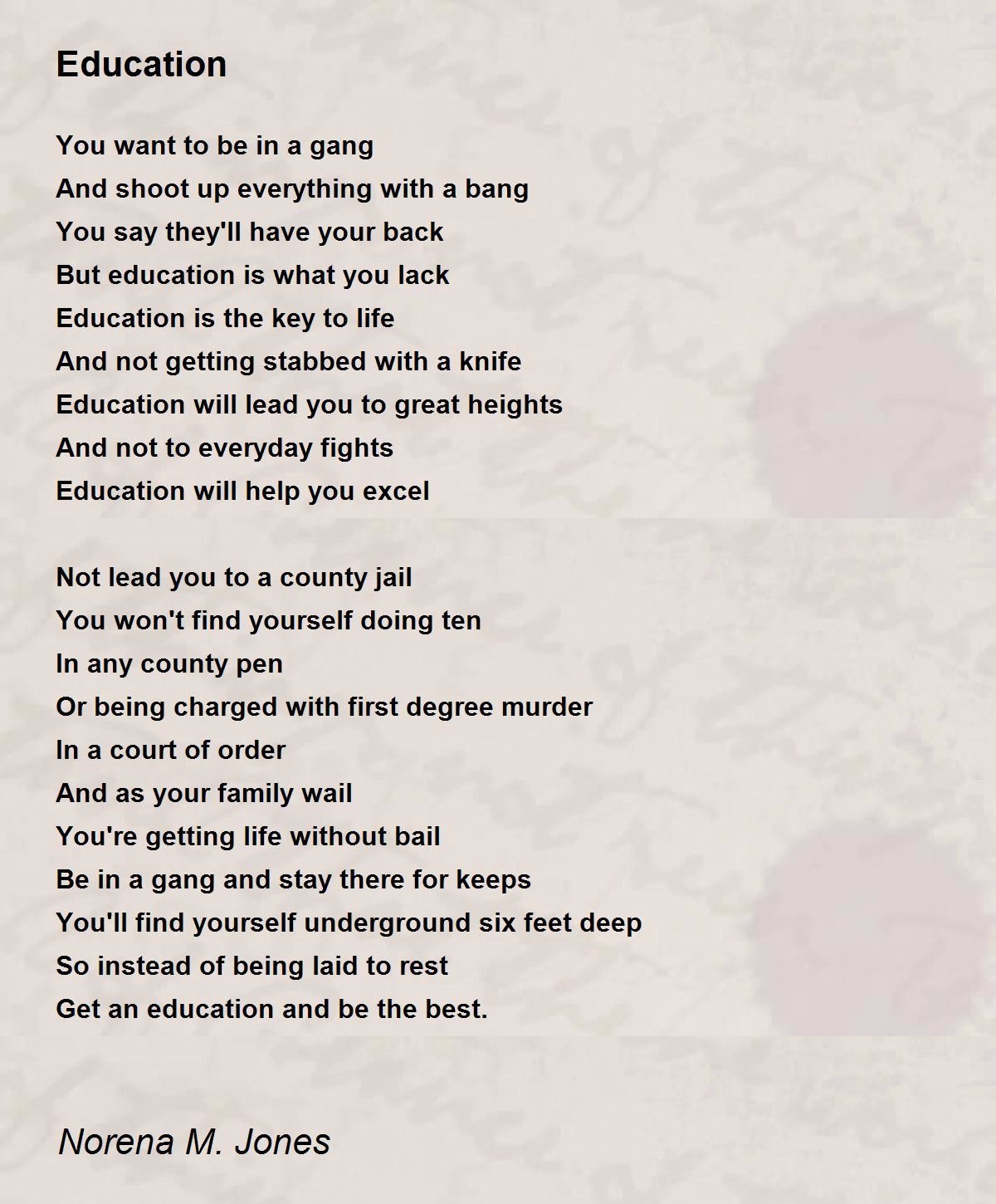
For educators, parents, and lifelong learners, the concept of integrating poetry into the curriculum often conjures images of dusty anthologies or complex, cryptic verses. Yet, beneath this perception lies a vibrant truth: the Educational Applications and Interpretations of the Poem are profoundly transformative, offering unique pathways to critical thinking, emotional intelligence, and authentic self-expression in classroom learning. Far from being a mere literary exercise, poetry serves as a powerful pedagogical tool, capable of unlocking deeper engagement across disciplines.
If you’ve ever wondered how to move beyond basic memorization and truly harness the rich potential of a poem, you're in the right place. We’re going to demystify poetry's role in education, offering practical strategies and a clear framework for interpretation that will empower both you and your students.
At a Glance: Key Takeaways
- Poetry is more than just literature; it's a versatile tool for learning, expression, and critical thinking across all subjects.
- Effective poetry analysis follows a clear, step-by-step process, starting with the title and moving through speaker, mood, tone, and theme.
- Integrating poetry fosters emotional intelligence, critical analysis, and a sense of belonging among students.
- Common challenges like assessment subjectivity and student discomfort can be overcome with inclusive strategies and a focus on process over perfection.
- Sharing personal poetry and creating a safe space for expression are vital for a thriving poetic classroom.
Beyond the Rhyme: Why Poetry Belongs in Every Classroom
Poetry, at its core, is a concentrated form of language, a distillation of emotion, idea, and experience. In an educational setting, this concentration makes it an exceptionally potent catalyst. It’s not just about appreciating meter or rhyme; it’s about using a poem to ignite curiosity, challenge perspectives, and build bridges to understanding that other mediums might miss.
Consider how poetry can serve as a:
- Catalyst for Learning and Expression: Students grappling with complex historical events, scientific theories, or philosophical concepts can find an alternative lens through poetry. Imagine history students crafting poems from the perspective of a historical figure, giving voice to forgotten narratives and exploring events with nuanced emotional depth. This process helps them navigate academic and emotional demands simultaneously, fostering a richer, more personal connection to the material.
- Authentic Assessment Opportunity: Moving beyond traditional essays or exams, transforming academic content into poetry can serve as a powerful and highly authentic assessment method. Instead of merely regurgitating facts, students must synthesize information, understand intricate relationships, and express their comprehension creatively. This not only deepens their learning but also showcases a different kind of mastery.
- Pathway to a Sense of Belonging: Poetry often explores universal human experiences—joy, sorrow, struggle, triumph, identity. When students engage with poems that mirror their own lives or offer windows into diverse experiences, it can strengthen their sense of belonging within the classroom community and the wider world.
- Bridge Between Abstract and Tangible: Abstract concepts, whether in mathematics, social studies, or philosophy, can be intimidating. Poetry, with its reliance on imagery, metaphor, and concrete detail to convey complex ideas, can merge these abstract concepts with tangible expressions. For instance, a poem about the flow of a river could illustrate principles of physics or even economic cycles.
- Means to Address Modern Ethical Dilemmas: Contemporary issues—from climate change to social justice, technological ethics to personal identity—are often fraught with ambiguity. Poetry provides a safe, reflective space to explore these dilemmas, allowing students to consider multiple perspectives, engage with empathy, and articulate their own evolving thoughts without the pressure of finding a single "right" answer.
For example, a poem discussing environmental impact could prompt a much deeper ethical conversation than a purely factual report. To see how poets can explore seemingly simple themes with profound depth, you might Explore Wynken, Blynken, and Nod, a piece that, despite its lullaby form, invites layers of interpretation.
Unlocking Meaning: A Practical Guide to Poem Interpretation
The very complexity that makes poetry so powerful can also be its greatest barrier. Students often feel confused, intimidated by "hidden meanings" or abstract language. The good news? Poetry analysis isn't about guessing what the poet "meant," but about understanding how the poem works and what it communicates. It's a skill, and like any skill, it can be taught and practiced.
Before diving into analysis, it's crucial to lay a solid groundwork with some key terms. Think of these as your basic toolkit for understanding any poem.
Foundation First: Key Poetic Terms Defined
- Poetic Form: This refers to the specific set of rules governing a poem's structure, including its rhyme scheme, rhythm (the pattern of stressed and unstressed syllables), and meter (the systematic arrangement of rhythm). Think of a sonnet, a haiku, or free verse—each has its own rules, or lack thereof, which significantly impact how the poem is read and understood.
- Speaker: The voice or perspective from which the poem is told. Crucially, the speaker is not necessarily the poet themselves. It could be an imagined character, an object, or even an abstract concept. Identifying the speaker helps you understand whose thoughts and feelings are being presented.
- Mood: The overall feeling or aesthetic communicated by the poem. This is the atmosphere the poem creates for the reader—is it somber, joyful, mysterious, eerie, whimsical? Mood is often evoked through imagery, setting, and word choice.
- Tone: The speaker's attitude toward their subject, the audience, or themselves. Tone can be conveyed through diction (word choice), syntax (sentence structure), punctuation, and imagery. Is the speaker sarcastic, reverent, critical, hopeful, melancholic? Tone is distinct from mood; while mood is what the reader feels, tone is what the speaker expresses.
- Theme: The core message, overarching topic, or central idea the poem explores. It's the universal truth or insight the poet wants to convey about life, humanity, or the world. Themes are rarely stated explicitly; they emerge from the interplay of all the poem's elements.
- Poetic Device: These are techniques authors use to present an idea outside its literal meaning, adding depth, emotion, and imagery. Common devices include metaphor (a direct comparison without "like" or "as"), simile (a comparison using "like" or "as"), alliteration (repetition of initial consonant sounds), personification (giving human qualities to inanimate objects), and symbolism (where an object or idea represents something else).
The Six-Step Journey to Deeper Understanding
Now, armed with your toolkit, let’s walk through a practical, step-by-step process for interpreting any poem, using Robert Frost's "The Road Not Taken" as our running example. This systematic approach helps students move beyond confusion to confident analysis.
- Start with the Title of the Piece:
- Action: Read the title carefully. What does it suggest? What questions does it raise?
- "The Road Not Taken" Example: The title immediately suggests a path or choice that wasn't pursued. It prompts questions: Why wasn't it taken? What kind of road was it? What were the implications of not taking it? This initial thought process sets a valuable framework for reading.
- Read the Text (Silently and Aloud):
- Action: First, read the poem silently to grasp the general meaning. Then, read it aloud. Pay attention to the sound, rhythm, and how punctuation and line breaks affect your reading. Notice the language, setting clues, and poetic form.
- "The Road Not Taken" Example: Reading it, you notice the language is relatively simple, though slightly dated. It employs a consistent rhyme scheme (ABAAB) and a fairly regular rhythm, with roughly nine syllables per line. The poem has four stanzas, each with five lines. Unpunctuated line endings suggest the thought continues to the next line. "Yellow wood" paints a clear autumn setting, implying a time of change or reflection.
- Identify the Speaker:
- Action: Who is telling this poem? To whom? Look for clues about their personality, age, gender (though not always explicit or relevant), and intentions. Is it a direct address to the reader, a soliloquy, or an observation?
- "The Road Not Taken" Example: The use of first-person pronouns ("I," "my") clearly indicates a personal reflection. The speaker seems to be recounting a past event from a present perspective, perhaps an older adult looking back on a significant life decision, ruminating on what might have been.
- Interpret the Mood and Tone:
- Action: What is the overall atmosphere (mood) of the poem? What is the speaker's attitude (tone)? Look at specific word choices, imagery, and phrases that convey these feelings.
- "The Road Not Taken" Example: The mood is distinctly somber and reflective. The line "And sorry I could not travel both" immediately evokes a sense of regret, or at least profound curiosity about the untaken path. The tone, conveyed through words like "maybe," "perhaps," and the reflective stance, suggests uncertainty, contemplation, and a touch of self-doubt about the decision made long ago.
- Identify the Theme(s):
- Action: Synthesize everything you've gathered so far—the title, text, speaker, mood, and tone. What is the core message or the universal truth the poem is exploring? What major ideas emerge?
- "The Road Not Taken" Example: The two roads are a clear symbol of life choices. The speaker's somber, introspective, and uncertain attitude points to several themes: the inevitability of difficult choices, the uncertainty of consequences, the concept of fate versus free will, and the human tendency to look back with wistful curiosity, if not outright regret, at paths not chosen.
- Summarize the Poem:
- Action: Articulate the key ideas of the poem in your own words. Translate any poetic devices or less clear messages into straightforward language. What is the poem ultimately about?
- "The Road Not Taken" Example: The poem is about an individual confronted with a fork in the road, symbolizing a significant life decision. They choose one path, acknowledging that the other looked equally inviting, and later in life, they reflect on this choice, wondering about the impact of the path not taken and remaining uncertain whether they made the "right" decision. The poem explores the enduring impact of choices and the persistent human question of "what if?"
Navigating the Hurdles: Addressing Common Challenges in Teaching Poetry
While the benefits of poetry in education are clear, educators often face legitimate challenges in its implementation. Acknowledging these hurdles is the first step toward overcoming them.
- The "Subjectivity" Trap: Assessment Objectivity: One of the most common concerns is the difficulty in standardizing evaluation criteria for poetic or creative responses. How do you grade a poem fairly? The subjective nature of creative expression can lead to grading variability, making educators hesitant.
- Creative Comfort Zones: Student Hesitation: Many students, particularly those who don't see themselves as "creative writers," may find expressing themselves through poetry daunting. The fear of being judged for their artistic output can lead to reluctance or disengagement.
- The "Irrelevant" Label: Perceptions of Accessibility: For many students, prior negative experiences or a lack of exposure to diverse poetic forms can lead to the perception that poetry is inaccessible, elitist, or irrelevant to their lives. They might feel it's an archaic art form disconnected from modern realities.
- Academic Skepticism: Proving Poetry's Merit: Within academic circles, especially in disciplines outside of literature, poetry can sometimes be seen as frivolous or lacking scholarly rigor. Convincing colleagues or administrators of its pedagogical value requires clear articulation and evidence.
Making Poetry Stick: Strategies for Inclusive and Engaging Classroom Integration
Overcoming these challenges requires a thoughtful, proactive approach. It's about shifting perceptions and creating an environment where poetry can truly flourish.
Demystifying Poetry: Inclusive Potential
The first step is to break down the elitist perception of poetry. Advocate for its inclusive potential by exposing students to a wide range of voices, styles, and forms—not just the canonical works. Help individuals find poetry that resonates with their experiences, whether it's slam poetry, song lyrics, spoken word, or traditional forms from diverse cultures. Show them that poetry isn't just in books; it's all around them.
Reinforcing Scholarly Validity
To counter academic skepticism, highlight peer-reviewed research on the cognitive and emotional benefits of poetry. Engage skeptics with evidence-based dialogue, showcasing how poetic exercises enhance critical thinking, empathy, and communication skills, making it a valid and valuable academic tool across subjects. Frame poetry not just as art, but as a method of inquiry and understanding.
Five Ways to Powerfully Embed Poetry in Your Teaching
Beyond general advocacy, here are practical, actionable strategies to bring poetry to life in your classroom:
- Poetry as a Medium for Discovery and Expression:
- How: Don't limit poetry to English class. Use it as a tool for discovery in any subject. History students can write from the perspective of historical figures, science students can write about natural phenomena (e.g., the lifecycle of a star), and social studies students can write about current events.
- Why it works: This moves poetry beyond mere "literary output" and positions it as a versatile vehicle for understanding and expressing complex ideas, encouraging cross-curricular connections.
- Make it Radically Accessible:
- How: Choose poems and introduction methods that are inclusive and reflect diverse backgrounds and experiences. Explore contemporary poets, international voices, and performance poetry. Use multimedia resources—videos of poets performing their work, visual art inspired by poems, or musical interpretations.
- Why it works: When students see themselves reflected in the poetry, or find forms that speak to their contemporary world, it breaks down the perception of inaccessibility and makes the subject feel relevant.
- Focus on the Process, Not Perfection:
- How: When assigning creative poetic work, emphasize the creative journey, the exploration of ideas, and the act of expression over artistic perfection or technical mastery. Provide clear rubrics that value effort, critical thinking, and the successful communication of ideas, rather than flawless meter or profound imagery.
- Why it works: This lowers the barrier for entry for students who are daunted by creative writing. It encourages free expression and risk-taking, fostering a growth mindset rather than fear of failure.
- Cultivate a Safe Sharing Space:
- How: Foster a welcoming, non-judgmental environment where students feel comfortable sharing their poetry or interpretations. Establish ground rules for respectful listening and constructive feedback. Consider anonymous sharing initially, or small group discussions before public sharing.
- Why it works: A safe space is paramount for vulnerability. Students are more likely to engage authentically when they know their efforts will be met with respect and encouragement, not criticism or ridicule.
- Lead with Vulnerability (Share Your Own):
- How: Humanize the experience by sharing personal poetry (if you feel comfortable) or poems that have deeply impacted you. Discuss why a particular poem resonates with you, or how you struggled with a piece before understanding it. This models the desired behavior of authentic sharing and critical engagement.
- Why it works: When educators show their own vulnerability and passion, it demystifies the creative process and encourages students to open up and share their own authentic thoughts and feelings. It's about connection and shared experience, not just instruction.
Real-World Impact: The Poetry Amnesty Initiative & Beyond
The power of poetry as a pedagogical tool isn't just theoretical; it's being implemented in innovative ways globally. One compelling example is the Poetry Amnesty Initiative. This project actively seeks anonymous poetic contributions from anyone in higher education worldwide. Submissions are compiled and shared to enrich understanding of diverse higher education experiences. The anonymity aspect is crucial, as it allows for candid exploration of sensitive topics—stress, identity, triumphs, failures—without fear of repercussions.
This initiative perfectly encapsulates many of the benefits: it's a catalyst for expression, fosters belonging through shared experiences, merges abstract academic pressures with tangible emotional outlets, and creates a safe space for vulnerable sharing. Such projects demonstrate that poetry can be a potent force for community building and well-being, not just academic rigor.
Common Questions & Misconceptions About Poetry in Education
Let's tackle some of the frequent concerns that arise when discussing poetry in the classroom.
"Is poetry only for English class?"
Absolutely not. While deeply rooted in literary studies, poetry's analytical, expressive, and empathic qualities make it invaluable across the curriculum. As discussed, it can be used in history (perspective-taking), science (describing natural phenomena, ethical implications of discovery), social studies (exploring current events and diverse cultures), and even math (patterns, logic, abstract concepts). Poetry is a tool for thought, not just an art form for one discipline.
"How do I grade creative work objectively?"
The key isn't necessarily "objectivity" in the traditional sense, but rather transparency and focus on the learning process. Develop clear rubrics that emphasize:
- Engagement with content: Does the poem reflect understanding of the subject matter?
- Application of poetic devices: Are specific devices used intentionally to enhance meaning?
- Clarity of expression: Is the message communicated effectively, even if not traditionally "beautiful"?
- Effort and revision: Did the student demonstrate a thoughtful process?
By focusing on these measurable aspects related to learning objectives, you can provide fair and consistent feedback without stifling creativity.
"My students just don't 'get' poetry. What then?"
This often stems from a perception that poetry is meant to be "solved" or that there's one correct interpretation. - Shift the focus: Emphasize that poetry is an experience. Encourage initial emotional responses before analytical ones. "How does this make you feel?" is a great starting point.
- Start small and relevant: Begin with short, accessible poems, song lyrics, or spoken word performances that directly relate to students' lives or current events.
- Model interpretation: Walk through the interpretation process with them step-by-step, showing your own thought process and uncertainties.
- Allow for diverse interpretations: Foster discussion where multiple interpretations are valued, as long as they are supported by textual evidence. The goal isn't uniformity, but informed individual understanding.
Your Next Steps: Bringing Poetry to Life in Your Classroom
The journey to effectively integrate poetry into your classroom is an ongoing, rewarding one. It starts with a willingness to experiment and a belief in the profound power of words.
Begin by selecting one small, manageable way to embed poetry—perhaps using a short poem as a warm-up activity to explore a concept in your non-literature class, or inviting students to respond to a prompt poetically. Focus on creating that safe space for sharing and remember to emphasize the process over the pressure of perfection.
By demystifying poetry and highlighting its versatile applications, you're not just teaching literature; you're cultivating critical thinkers, empathetic individuals, and articulate communicators. You're offering your students a unique and powerful way to understand themselves, their peers, and the complex world around them. So, take a step, however small, and watch as the verses unfold new possibilities in your classroom.